Being seen as “salesy” is one of the biggest worries for almost every maker and handmade business owner.
And, as a result, a lot of us hold back from promoting our work as much as we should, and our businesses stay smaller than we should.
But I think that this issue is far less about how we want to be seen by our customers than how we want to feel. Or maybe more accurately, how we don’t want to feel.
In other words. It’s not about them, it’s about us.
There are customers who want to buy from us, and would buy from us, if only we would stop making ourselves invisible, and tell them more about what we’re selling.
They’re not going to view us negatively. They want to know what we’re offering. They want us to help them to pick the right thing, or to show them how to use it, wear it, gift it, or display it.
They want us to be “salesy” – in the right way.
And that’s the crux of the issue, isn’t it?
Because we don’t know how to do that.
We’re uncomfortable asking people to buy because we don’t know how to do it in the right way.
We don’t know how to ask people to buy from us without making it weird.
And what we’re really doing is avoiding discomfort and telling ourselves that it’s okay because it’s protecting our customers from pushy selling.
But we’re not protecting anyone.
We’re not protecting our customers because we’re leaving them hanging when they’re actually ready to buy from us.
And we’re not protecting ourselves, because we’re keeping ourselves poor and our businesses small.
This post is all about how to be salesy in the right way.
Because you are in the business of selling things. Without sales, you don’t have a business.
And, most importantly, your customers WANT it. People love to be sold to. They just don’t love a certain kind of selling.
Let me tell you about two experiences I had as a customer, and how they shaped my view on what good selling is.
Where “salesy” got its bad reputation
When someone says “I don’t want to be salesy,” they’re usually picturing a very specific kind of seller. The old school friend who cornered you at a wedding to talk about their Aloe Vera MLM, or the pushy car salesman from a film.
For me, it’s the mattress salespeople.
I recently bought a new bed, and I needed to get a mattress for it. I wasn’t keen on buying a mattress online without seeing it and trying it, so I went out to visit a few of the usual high street bed shops.
And I had the kind of experience that makes you never want to buy anything from anyone again.
I had a few non-negotiables (a firm mattress, no memory foam), and I had a bit of salesperson-suspicion from a previous mattress purchase that wasn’t the right choice, and that I couldn’t exchange (despite the salesperson telling me I definitely would be able to)
So I entered the store wanting to get a sense of my options, test out how firm the mattresses felt, and then get some answers to specific questions.
In other words, I had a sense of the experience I wanted to have while buying a mattress.
But none of that happened. Because a salesperson shadowed me around the whole store and made me feel really uncomfortable, and eventually annoyed.
He commented on every mattress I walked past. He interrupted my conversations with the person accompanying me. And every time I felt a mattress for firmness, he told me that it was pointless because you can’t tell that way.
I tried to be patient because I understand that times are tough for brick and mortar stores, and that a lot of businesses give their salespeople quotas and targets that encourage, or even force, this kind of behaviour.
But the experience was so unpleasant that I could not wait to get out of the store, and I probably will never go back there again.
When makers say they don’t want to be salesy, they almost always mean they don’t want to be that. Fair enough. But the response to that fear is often to back so far off that they barely sell at all. And that’s a different problem with a different cost.
Let’s look at a completely different shopping experience.
When buyers love to be sold to
I was heading to a friend’s wedding in Kefalonia, and I needed a dress to wear. It was quite a casual wedding, so I popped into a local shop.
It was one of those little boutiques that aren’t too expensive but where the owner really curates the collection of things on offer.
This one sold homewares and clothes, and I loved the style. I was browsing for dresses and had picked up a little floaty pink dress that I wasn’t sure about, but I wanted to try on.
When I asked if I could pop into the changing room, the sales assistant walked me over and on the way she asked me if there was an occasion that I was buying for. It felt like a casual conversation, rather than the start of a sales pitch.
I told her that I was going to a wedding in Greece, and she said, “Lovely! I’ll tell you what. Just in case that isn’t right, I’ll pull you a few more outfits that you might like to try. Just so you’ve got some other options.”
It didn’t feel pushy at all. It felt like being taken care of. A bit like having a personal shopper picking out some things just for you.
It felt helpful and like it was saving me the time and energy of having to browse.
She chose things that I probably would never have picked for myself, and I ended up buying three dresses because I loved them so much.
She upsold me from one dress to three, and I loved it, and I thanked her for it.
People love to be sold to when they have money to spend, and someone helps them to find what they need. And they often spend more because of it.
That is the right kind of “salesy”
What selling actually does
Selling is helping the customer make the choice that’s right for them. Making it easier for them to buy from you, instead of being so scared to talk about what you sell, that you accidentally hide half the information they need.
It’s making them feel taken care of, without pressure. Assuming that they want to buy something, but not pushing them on the timeframe. Grabbing alternatives for them, and showing them other options.
It’s writing a product description that answers the questions a buyer is silently asking before they decide. Will it fit on my shelf? Is it available in other colours? What if I don’t like it when it arrives?
It’s sending an email to your list saying, “Mother’s Day cards are in the shop now, and last posting is the 21st,” because you know some of them have been meaning to buy and will be glad of the reminder.
None of that is pushy. It’s helpful to the person who is in the market for what you’re selling.
It assumes that some of the people in front of you are already interested, already considering it, already half-decided, and your job is to make it easy for them to actually do the thing they came to do.
That’s good salesy.
The question worth asking about your marketing
If your content isn’t for people who might want to buy something from you, who is it for? And why are you spending time on it?
It’s worth sitting with that question for a minute, because the honest answer often shifts the way you think about your content.
A lot of maker marketing is built around being useful, being community-minded, being entertaining, being relatable.
And a lot of it is built around talking about what it’s like to run your business, rather than what you have for sale.
All of these are fine, but none of them are selling. If every post is commentary about your business, every email is a chatty update, and every story is about your studio life, you’re producing a lot of content that doesn’t ask anyone to do anything.
That feels safe. It feels comfortable. But it isn’t selling.
The people who follow you because they enjoy the content will keep enjoying it. But they might not buy, because you never really invited them to. And when you try to sell, they might not want that from you.
Not every post has to be a direct sales offer (remember that selling isn’t always about being direct), but somewhere in the mix, there has to be content that says, in clear words, what you make, who it’s for, and how to buy it. Or how will they ever find you?
It’s not easy. The sales assistant helping me pick a dress for the wedding made it look easy. But like all skilled work, it isn’t.
It will take time for you to get better at finding the commercial angle in conversational content, like social media, and you will be uncomfortable. But we all still need to learn this skill.
What being salesy actually looks like in practice.
Being salesy, in the proper sense, looks pretty calm. It’s direct, low-pressure, and clear about what’s on offer.
It looks like:
- Telling people what’s available. “I’ve just listed three new pieces in the shop.”
- Telling people who it’s for. “These are sized for newborns up to about six months.”
- Telling people when it’s available until. “I’m taking commission orders until the end of the month, and then I close the list for the summer.”
- Asking for the decision. “If you’ve been thinking about one, this is the week to grab it.”
- Following up with the people who showed interest. “You signed up for my list at the show. Here’s a link to my best sellers from the event.”
None of those sentences are pushy. They’re just clear. And a lot of makers’ marketing isn’t clear, because they’ve been trying so hard not to be salesy.
The other thing confident selling does is make it easier for people to say no.
When you ask directly, people can answer directly. They can decide it’s not for them, or not now, and move on with their day. When you hint and soften and trail off, the buyer is left doing the work of figuring out what you’re actually offering and whether they’re meant to do something about it. That’s tiring. A lot of them will just close the email and tell themselves they’ll think about it later. But they won’t.
Asking for the decision serves the people who would have said yes, and it serves the people who would have said no. It’s only awkward for you, briefly, and that’s a price worth paying.
The discomfort is real, but it’s yours to work on
If selling more directly feels uncomfortable, that’s because you’re doing something you haven’t done much before. It gets easier with practice.
The makers I’ve worked with who do it well are the ones who decided that the discomfort was a price they were willing to pay so that they could build the business they wanted. They stated their prices. They sent the email reminding people that the sale closes tomorrow. They asked, in clear words, for the decision.
It doesn’t come naturally to a lot of us. But it pays you back every time someone buys because you made it easy for them to. The alternative is being so afraid of sounding pushy that you barely make any sales, which is a much higher price to pay.
If you’re ready to be a bit more salesy
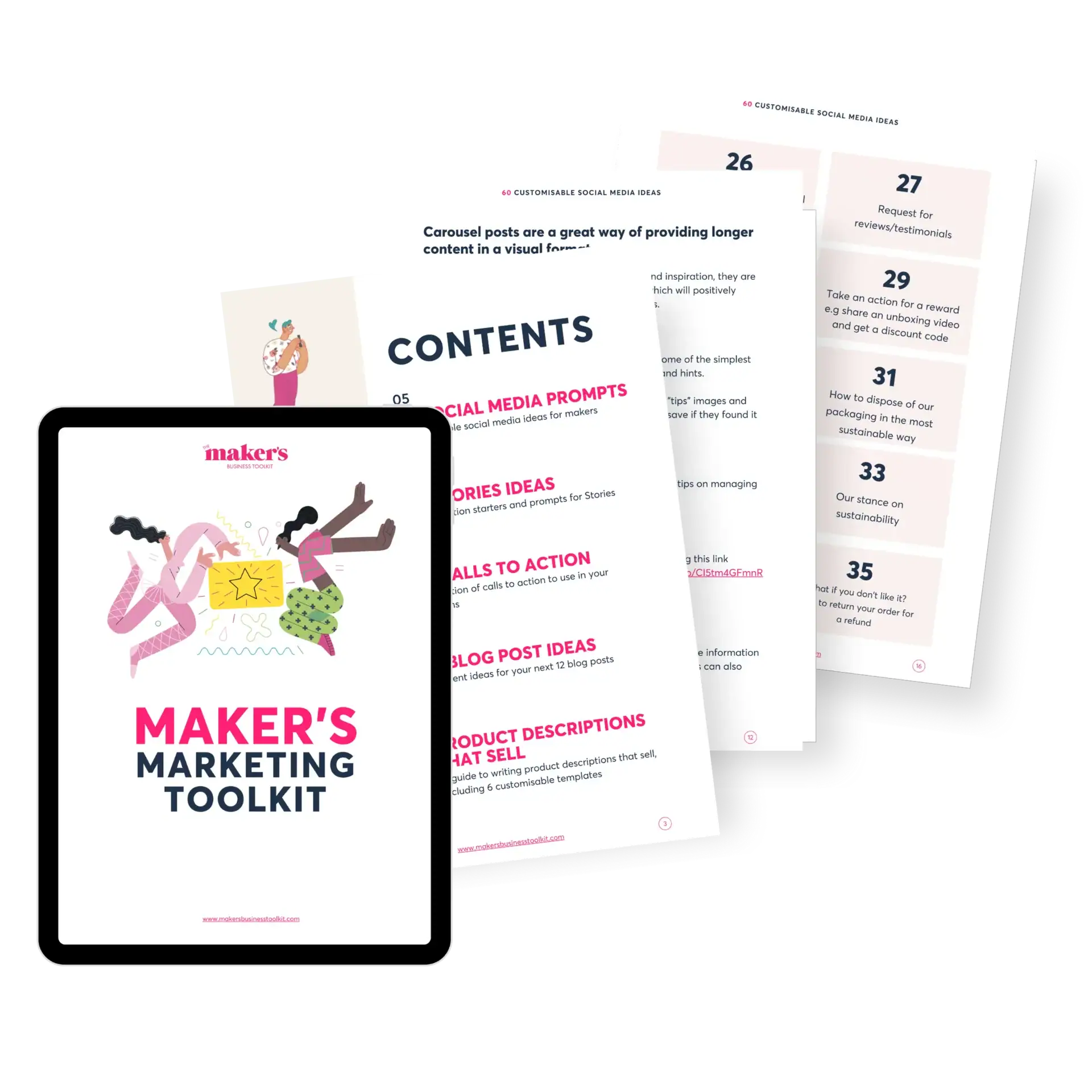
If you’ve been wanting to sell more directly but you don’t know what to actually post, what to say, and how to do it without sounding like the version of “salesy” you’ve been avoiding, The Maker’s Marketing Toolkit could help you.
It’s a pack of social post ideas, Story prompts, calls to action, blog starters, and a product descriptions guide, all written for makers and all designed to help you show up consistently with content that actually sells. Clear, confident, and useful to the people who are waiting to buy from you.