Here’s something I see all the time: makers who feel like they’re working incredibly hard, year after year, but somehow end up in the same place, wondering why all that effort isn’t showing up in their bank account.
When you’re deep in the day-to-day of running a handmade business, it’s really difficult to see the bigger picture.
Our brains really remember the stressful bits. The completely overwhelming (or maybe completely underwhelming) Christmas rush, the wholesale order where you didn’t get paid for three months, the customer who gave you a one star review.
But the details? The information that grounds you and shows you what you need to avoid and what you need to lean into? It’s not as memorable so it can be easy to miss.
That means that when January rolls around and you sit down to plan your year and set your goals, you’re not working from facts. You’re working from feelings, frustration and fuzzy memories.
That means your goals can end up being based on flawed information, and you miss the opportunities (and the warning signs) hidden in the data you didn’t even look at.
Garbage in, garbage out – as the saying goes.
An end of year review interrupts the cycle of each year being full of the same mistakes, challenges and frustrations as the previous one.
It gives you a true starting point for the year ahead, with real information that you can use to control the direction of your business.
That way you start the year with more to go on than just vague feelings that things need to be “better” or that the profit is just “not enough”

What an End of Year Review Actually Does for Your Handmade Business
It shows you the patterns you can’t see when you’re in the thick of it
We’re emotional about our work. And we’re emotional about our business. But our feelings about how things are going are often very different to the reality.
Because we focus too much on the highs and the lows. We remember the thrill of making a ton of sales at a craft market – not how much profit we made after expenses.
Or we remember the show where we made zero sales and cried in the car on the way home – not the 10 email subscribers we signed up, a couple of whom went on to become our best customers.
Without the whole picture we can end up optimistically hanging on to things that aren’t working. Or beating ourselves up for not doing better, when actually things are moving in the right direction.
A review gives you more context than your feelings do. It shows you reality vs perception. What you think happened vs what actually happened.
And those two things are often surprisingly different.
It’s the foundation for realistic goals
You can’t plan next year without understanding this year. I know that sounds obvious, but so many makers skip straight to goal-setting without ever looking back at what they’ve just been through.
Goals don’t serve you when they’re disconnected from reality. Because your goals only happen when you can accurately decide what actions you need to take to change things.
For example: if you set a goal to double your sales but you don’t understand what factors affected your sales this year, you won’t know how to go about making that goal a reality. So it ends up being just a wish – and one that is unlikely to come true
It helps you stop repeating the same problems
Over-committing. Underestimating how long things take. Putting loads of effort into things that don’t actually bring in much money. Ignoring the products that actually sell well because you’re bored of making them.
Sound familiar? These patterns show up year after year for a lot of makers, simply because they focus only on the top level problem – “I’m not making enough money to live” without looking for the underlying factors contributing to that problem.
That’s the real point here: don’t repeat the same year over and over. A review helps you see what’s actually going on so you can make changes.
Why Some Makers Avoid Reviews (and Why That Keeps Them Stuck)
If reviews are so useful, why do so many makers skip them?
Maybe you’re sceptical about whether it will genuinely help. Maybe it’s intimidating. Maybe you’re avoiding the discomfort of confirming things you already suspect but don’t really want to face. Maybe you’re allergic to ‘new year, new you.’
Or maybe, honestly, you’re just worried that looking back will make you feel worse, not better.
But here’s what you need to remember.
There’s no forward progress without looking back at your mistakes. Avoiding the truth simply means that problems get stored up until they get so big that they can no longer be ignored.
Your mistakes are nothing to beat yourself up about. Sometimes they’re not even mistakes. They’re just things you tried that didn’t work, or didn’t work enough.
Clarity, not shame, is what allows change. You can’t fix what you can’t see. And you definitely can’t fix it if you’re too busy feeling bad about it to actually look.
The Three Areas to Consider in an End of Year Review
Your end of year review doesn’t have to be a big production. Start with three simple questions.
1. What worked this year?
Look at your sales. What actually sold well? Which products brought in the most money, or the most profit? What marketing actually got eyeballs on your work? Were there times when work felt easier, more enjoyable, or just clicked into place?
The answers will help you to identify what it’s worth doing more of. Your business is already giving you feedback about what works, you just need to listen to it.
2. What didn’t work?
What took up loads of your time but didn’t really bring much back? Where did the avoidable stress come from? Were there decisions you kept putting off until they became problems? Things that consistently slipped through the cracks?
This is where you need to be honest without being harsh. Acknowledge what didn’t work without turning it into a stick to beat yourself with. It’s just information. You tried things, some of them didn’t work, and now you know.
3. What do you want to do differently next year?
Where do you want more ease? More profit? What are you absolutely not willing to repeat? What needs to change in how you work, not just what you work on?
But remember, there is no point following all of the advice if it’s going to mean that you end up with a business you hate running. What you want your business to look like, and what you want it to provide for you are the foundations that everything else needs to be built on.
Don’t follow anyone else’s idea of success. This is about building a business that gives you more of what YOU want.
How to Stay Out of the ‘Repeat the Same Year’ Cycle
A one-off review helps. But if you really want to stop repeating the same patterns, you need something more consistent.
Monthly reviews can help you catch problems when they’re small, so you can make changes faster. They keep you connected to what’s actually happening in your business, instead of relying on your memory at the end of the year.
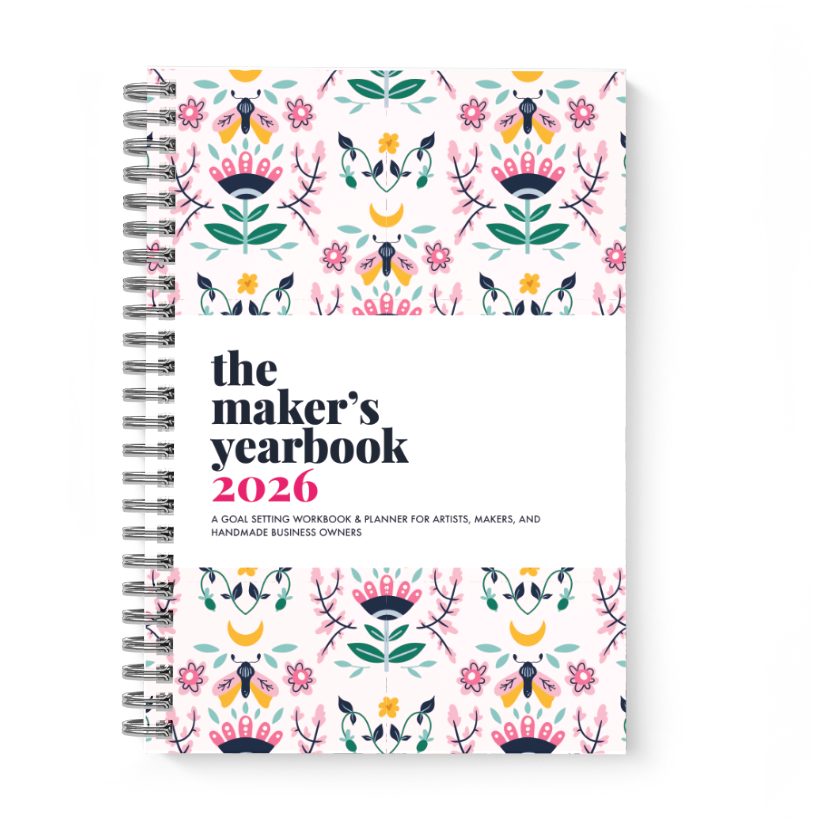
This is exactly what the Maker’s Yearbook is designed to support. It builds a simple monthly review into your routine, so you’re not trying to remember twelve months of business in one sitting. You reflect as you go, spot patterns early, and adjust before small issues become big ones.
A few minutes spent reviewing each month can mean you have more accurate and useful information to feed into your end of year review.
Find out more about the Maker’s Yearbook here
Get Started with a Simple Review
If you’ve never done an end of year review before, or if the thought of it feels overwhelming, start small.
I’ve put together a free Year-End Review Checklist for Makers and Artists. It’s a simple guide that walks you through three key questions without requiring detailed records or perfect memory. Best guesses are enough. The point is just to get started.
And it should take you less than 30 minutes.
Because often the hardest part of doing your review is actually just finding the time.
Even if you’ve been dreading what you’ll find, once you start, it’s usually not as bad as you think. Sometimes it feels like everything is awful, and then you actually look at the numbers and realise things were better than you remembered.
Get the Year-End Review Checklist for Makers and Artists
This checklist is the quick version. If you want to build this kind of reflection into a simple monthly routine that keeps you on track all year, that’s exactly what the Maker’s Yearbook does.
But for now? Just start. Try it. See what happens. You don’t need to do this perfectly, or even well. You’ll get better with time, and lots of businesses have been built on people just showing up, even when they didn’t really know what they were doing.