There’s a really common assumption that goal-setting doesn’t work for creative people.
And I get why people think that. If you’ve ever sat down in January, written out a big list of everything you want to achieve, felt really motivated for about two weeks, and then watched the whole thing collapse … you’d be forgiven for thinking that maybe goal-setting just isn’t for you.
But I don’t think that’s quite right.
I think goal-setting can work really well for makers. The problem is that we’re usually trying to do it against a massive headwind, and that headwind makes everything harder than it needs to be.
Let me explain.
The January headwind
January is a really, really difficult time for artists and makers to be setting goals for the year.
You’re just coming off a really exhausting, full-on Christmas selling season. Then there’s family Christmas and everything that goes with that. And when it comes to January, you’re ready to collapse.
But there’s this little period at the beginning of January where the world gets very loud and shouty about goals. And you feel like you have to join in with that, or you’re somehow behind if you don’t.
So you set some goals. Maybe you write a big list. Maybe you buy a new planner. Maybe you map out your whole year.
And then you try to start executing on those goals immediately. New year, new habits, fresh start, all of that.
But you haven’t taken into account the fact that you have reduced capacity right now. You’re exhausted. You need to rest. Your brain isn’t really working properly.
So anything you set up for yourself in January usually doesn’t stick, because you’re trying to start the execution at a time when you don’t have the capacity to follow through.
By mid-January, most makers are really struggling. They need a break. And that’s the moment of danger, where all the goals they’ve written for themselves are just about to be put into a drawer and never looked at again.
The gap nobody talks about
Here’s what I think is actually going on.
Setting goals and executing on goals are two completely different activities. And there’s a gap between them that we tend to overlook.
Setting goals is about deciding what you want. What direction you want to take your business in. What you want more of, what you want less of.
Executing on goals is about actually doing the work. Building the habits. Showing up consistently. Making progress.
These two things require different kinds of energy.
Setting goals just needs a bit of reflection time. A chance to think about what matters to you. It doesn’t need you to be at peak productivity. You can do it when you’re tired, as long as you’ve got a bit of mental space.
Executing on goals needs capacity. It needs you to have energy for building new habits, for pushing through resistance, for doing things differently than you did before. And it needs you to keep going when the results don’t show up immediately.
The mistake most of us make in January is trying to do both at once. We set ambitious goals AND try to start executing on them immediately, at the exact moment when we have the least capacity to follow through.
No wonder it doesn’t work.
What January is actually good for
January is a natural time for goal-setting. It’s the start of the year. It makes sense to think about what you want the next twelve months to look like.
But January, for makers, is a terrible time for execution.
So what if you separated them?
What if January was for setting looser goals and putting some simple working practices in place? And February was when you actually started executing?
This changes everything, because it means you’re not trying to sprint while you’re still recovering. You’re using January for what it’s actually good for: reflection, direction-setting, and building the foundations.
Then when February comes around and you’ve got some energy back, you’ve already got your goals clear and your working habits established. You can actually start making progress, instead of staggering through January until your body forces you to take a rest.

If you’d like some support with this process, I’m running a workshop called Your Best Year Yet on January 13th.
It’s designed for makers who are tired, who are coming off a difficult season, and who want a different approach to planning their year.
Sign up at https://makersbusinesstoolkit.com/your-best-year/
What to actually do in January
So if you’re not going to try to execute on big goals in January, what should you actually do?
Two things: set some loose direction for the year, and build a few simple working practices that will support you when you are ready to execute.
For the direction-setting, keep it simple.
Ask yourself:
What do I want more of this year?
What do I want less of?
What direction do I want to take my business in?
Don’t worry about detailed targets or quarterly milestones. You just need a sense of where you’re heading.
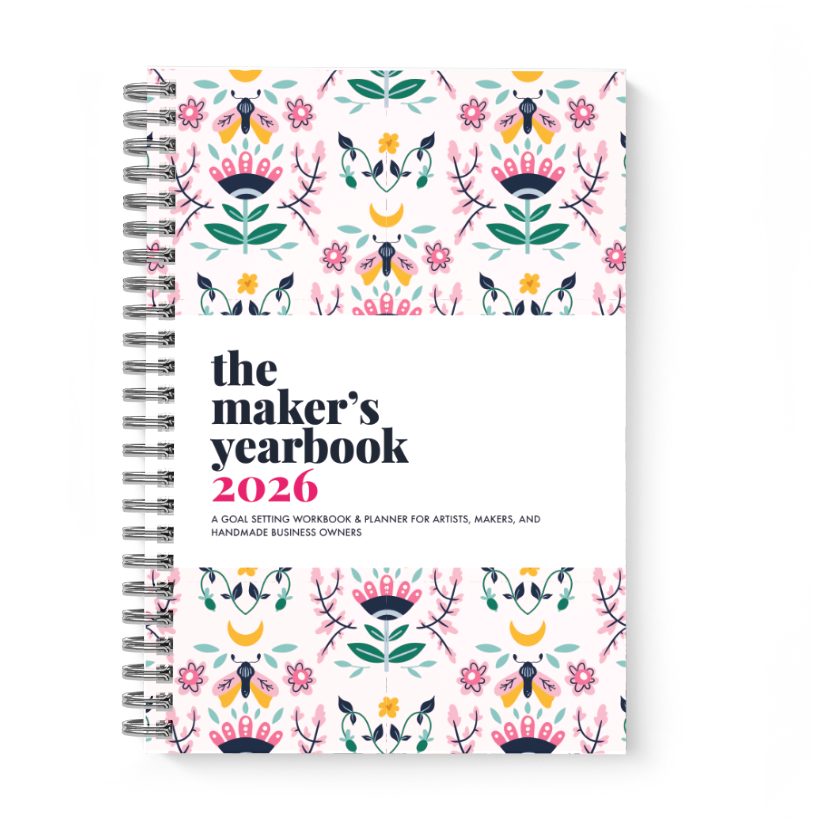
For the working practices, I’d suggest the three core routines from the Maker’s Yearbook.
They’re not new or sexy, but they work, and they will prevent you from forgetting all about the goals you set in January while you take a break.
1. Set yourself a monthly goal and break it down into actions you can take.
Not an annual goal. A monthly goal. Something specific enough that you can break it into actual tasks, and schedule those tasks into your weeks.
Don’t worry about picking the “right” thing. Just choose something that will contribute a little towards one of your annual goals.
This is how big goals stop being overwhelming and start being achievable.
2. Pick your three most important tasks each day and do them before you do anything else.
Bonus points if at least one of them is an action step for your monthly goal. This keeps you focused on what actually matters instead of getting pulled into whatever lands in your inbox.
3. Review each month.
Look at what worked, what didn’t, what you want to do differently. This helps you spot mistakes, problems and opportunities more quickly. And it helps you recognise the wins, which are easy to forget when you’re busy.
These routines don’t take long. But if you commit to doing them regularly, they can save you a lot of time and help you make the best use of the time you’ve got.
The Maker’s Yearbook is designed to make these routines as easy as possible to stick to, with dedicated pages for monthly goals, daily task planning, and monthly reviews all built in. You can find out more about it at https://makersbusinesstoolkit.com/makers-yearbook/
The real secret
What makes the difference for artists and makers is the things you do consistently. Day in, day out. Week in, week out.
It’s not about having a big burst of motivation in January. It’s about building habits and routines that you can actually maintain once you get into February and beyond.
If you can spend January getting clear on your direction and establishing these simple practices, you’ll be in a much better position to execute when you’ve actually got the energy for it.
And that’s how goal-setting starts to work for makers. Not by pushing harder in January, but by being smarter about what January is actually for.
If you’d like more support with the direction-setting part, join me for Your Best Year Yet on January 13th. https://makersbusinesstoolkit.com/your-best-year/