I think we’ve all been to craft fairs or events where we weren’t making many sales, there was hardly anyone there, and we’ve wondered: is this even worth it?
And if you’re just looking at sales on the day, the answer might be “not really.”
The stall fees are significant, the time commitment is huge, and the sales don’t always cover what it cost to be there. That’s before you factor in the exhaustion.
But craft fairs can also deliver real value that goes well beyond what you take home in sales.
Meeting your customers face to face, building trust, growing your mailing list, making connections that turn into sales weeks or months down the line.
Those things are valuable and can make a meaningful difference to your business. The trouble is, it’s hard to calculate how much of a benefit they give you, and that makes it easy to use them as a reason to keep doing fairs that aren’t actually delivering anything at all.
So the question isn’t really “are craft fairs worth it?” It’s “which craft fairs are worth it, and how do I tell the difference?” The only way to answer that is to sit down and run the numbers properly, and then honestly and realistically assess the less measurable benefits
Work out what it actually costs you to be there
It’s easy to get a sense of whether a fair went well. But feelings aren’t finances and there are lots of expenses involved in attending a fair or show, many of which get forgotten when we’re having a good day and ignored when we’re having a bad one.
Obviously you’ve got your stand feeds to pay. But there are lots of other expenses that need to be considered.
Travel and accommodation
If the event is more than an hour or two away, you’ve got fuel, food and possibly a night in a hotel or B&B. For a two-day event any real distance from home, this can add up to even more than the stand fee itself.
Card processing fees
A small percentage per transaction, but it is a cost and it needs to be taken into account. If you took £500 on the day and your card reader charges 1.75%, that’s close to £9 in fees.
Packaging and display materials
Bags, tissue paper, business cards, anything you bought or replaced for this event. These costs tend to feel small individually, but they have to be paid for, so they need to be considered.
Stock made specifically for the fair
If you made extra stock, the materials and your making time are costs of attending, and they have to be deducted from any sales, before you can work out the profit from the show.
Your time
This is the one that always gets skipped.
The day spent selling is the obvious part, but there are also the hours spent packing the car, driving there, setting up, breaking down, driving home, and unpacking. For a fair that’s any distance away, you’re easily looking at two full days of your time, even for a one day show.
And there’s the time you spent in the weeks before: making stock, printing materials, planning your display. If you wouldn’t spend all of those hours working for free in any other part of your business, they belong in this calculation too.
Consider how many sales you need to break even (on all your costs)
Once you know the full cost of attending a fair, you can work out what you need to sell to break even. That number is the minimum sales you need to make to avoid losing money. Anything above it is profit.
Even if you’re not sure of all of your costs, it’s worth doing a rough back of the envelope calculation before you book a show.
When you know your break-even number in advance, you can look at a fair and ask: given the stall fee, the audience size, and the type of buyer this event attracts, is it realistic that I’ll sell enough?
It might help you avoid making the mistake of using multi day shows, with high stand fees far away from home, as a strategy to increase your audience further afield when there are cheaper ways to do that (a mistake I made – and paid for)
Look at the simple break-even maths to spot fairs where you’re going to be up against it from the start.
If a stall fee is £300 and your average product sells for £25, you need to sell twelve items just to cover the fee, before you’ve paid for anything else. That might be perfectly achievable at a busy, well-attended event with a well-off demographic. At a quieter one, it might be a stretch.
The answer is rarely a clear yes or no – especially if you haven’t done the show before – but it helps you to understand what you’re risking, and also to consider what you hope to gain and whether it is worth it.
Consider the returns you can’t measure on the day
You shouldn’t necessarily rule out shows that are unlikely to deliver break-even.
Craft fairs have additional potential benefits that can be quite valuable to your business but are difficult to predict at the point you’re deciding whether to book.
The biggest one is what you learn about your customers. Meeting your customers in person is the very best way to understand who they are and why they do or don’t buy your products.
You literally get to see the type of person who buys from you.
You get to read body language, overhear the conversations people have with each other about your work, and chat with them about what they like.
They’ll often share their thoughts unprompted about who they’re buying for and why, which is invaluable information.
You get to see things like their family situation, sometimes even where else they shop.
No amount of Instagram analytics gives you that kind of insight, and the things you learn at a single event can shape how you talk about and present your work for months and years afterwards.
Then there’s trust.
People who have met you in person, even if they didn’t buy on the day, are much easier to sell to later.
They’ve seen that you’re a real person running a genuine business so they’re not worried about getting scammed online.
If you pop up on their feed they’re more likely to follow you and engage with your content in ways they wouldn’t have done if they hadn’t met you.
They’ve handled your products, so they understand the quality, the sizes, the detail of the work.
That removes a huge barrier to buying online later.
I did at least one craft fair where I lost money on the stand fee, but a customer I met that day went on to make repeated large purchases from me over the next few years. That single relationship more than made up for the loss on the day.
If you sell higher-priced items, or work that lends itself to commissions and repeat purchases, getting in front of the right audience can mean that you get ongoing returns well beyond what you take home on the day.
And there’s your mailing list. Getting someone to sign up to your mailing list is significantly easier when they’re standing in front of you than when you’re trying to convert them from a social media post.
Every email address you collect at a fair is someone you can sell to month in, month out (for as long as they’re happy to hear from you) without paying another stand fee.
A mailing list gives you sales and audience stability that isn’t tied to any single event or platform.
So there are a ton of less tangible benefits that you can get from doing shows. But you have to be mindful of them and considering how you can strategically maximise your opportunity to gather customer data, get email signups and encourage purchases after the event.
It’s not enough to say “craft fairs are advertising” and leave it at that. It’s your job to get ALL of the benefits from the event so that it is “worth it.”
Ask yourself:
- Did I do everything I could to maximise sales AFTER the event, as well as on the day?
- Did I collect email addresses? Could I have done more to sign up more people?
- Did I keep notes of what I observed and the conversations I had with people?
- Did I give out business cards or postcards advertising commissions or courses?
- Did I make it easy for people to know who I am so that it’s easy for them to find me again and to recognise me when they see me online or at the next show?
And to be clear, when I say “did you do everything you could to sign people up to your mailing list?” I don’t mean that you need to give discounts or other incentives.
This is about being brave enough to just ask people to sign up, without apologising or telling them that you “promise not to spam” them.
And if you did a show and you didn’t hit your sales target AND you feel that there just wasn’t enough opportunity to gather emails and learn about your customers, then it probably doesn’t make sense to do that show again.
Track it so you can compare
The real value of doing this kind of assessment comes over time. When you track the numbers for every fair you do, you start to see patterns.
You see which events consistently cover their costs. Which ones bring in the kind of customer who comes back.
And which ones give you an ego boost or make you feel important, but never quite deliver the benefits to your business.
There are lots of potential benefits from a craft fair that are difficult to predict in advance, but you can record your observations about them afterwards.
A simple tracker that records your costs, your sales, and a few notes on the quality of the audience and what you learned is all you need. It takes five minutes after each event, and over a season or two it gives you a completely different basis for deciding where to spend your time and money next year.
Without that data, you’re making decisions based on how you felt on the day. With it, you’re making decisions with much more perspective and nuance.
If you’d like a ready-made tool for this, I’ve got a free Craft Fair Profitability Tracker that does the maths for you. Plug in your numbers after each fair and it will show you exactly where you stand. It also has a field for capturing notes about the less measurable things, like the people you met and what you learned, so you’ve got the full picture when you’re deciding which fairs to do next season.
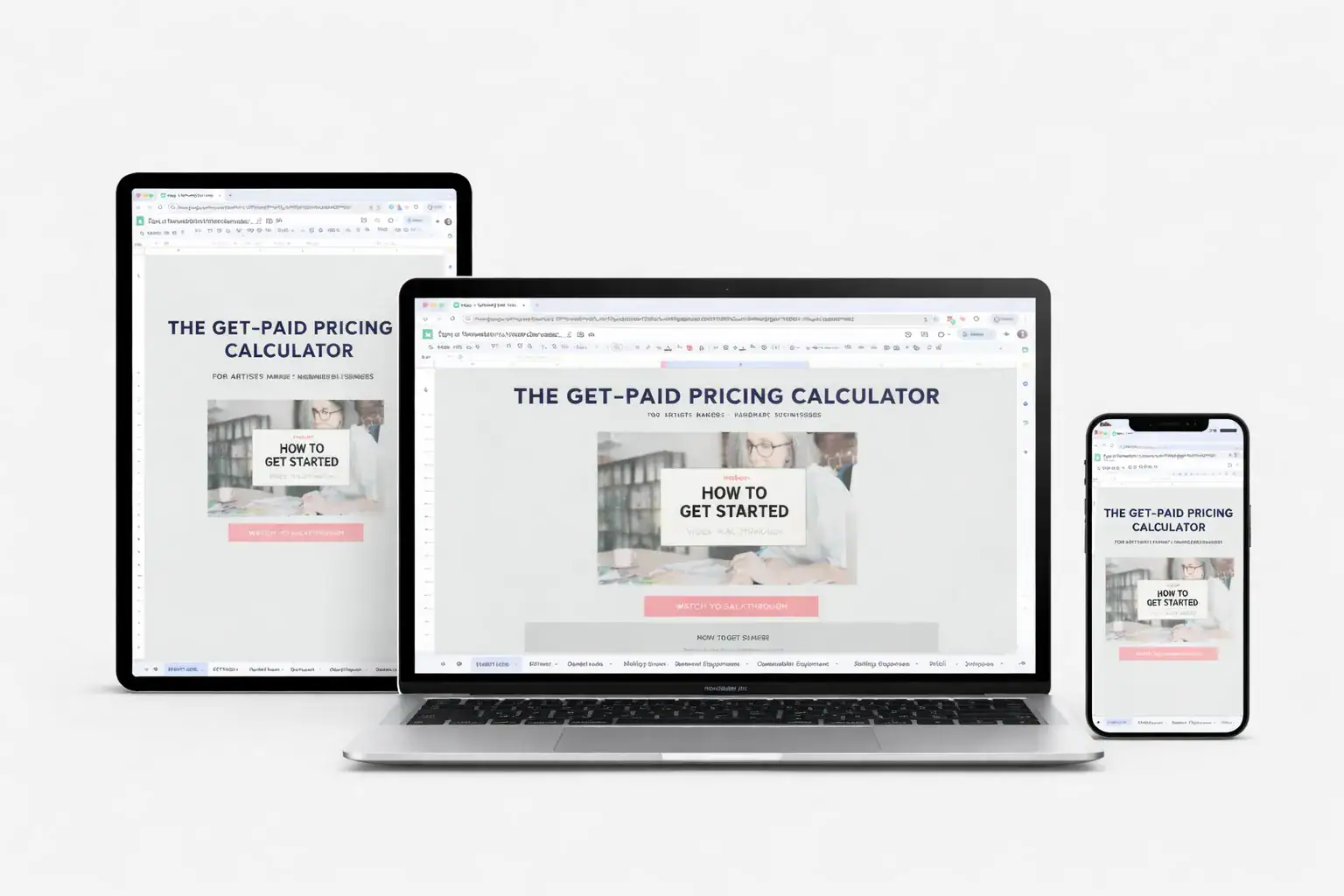
And if you want to make sure that your prices accurately reflect all of the costs in your business, including your craft fair costs, the Get-Paid Pricing Calculator will make this really quick and easy for you.